,
, 
A modern smartphone is no longer just a means of communication. TToday, users pay attention to camera quality, battery life, performance, and support for 5G and eSIM. This technology is becoming increasingly popular thanks to services such as eSIM Plus, allowing users to activate mobile service without physical SIM cards.
However, even the most advanced features don't really matter if the device doesn't meet your daily needs. Therefore, when choosing a new smartphone, it is important to understand which features truly affect the user experience.
What Should You Prioritize When Buying a New Smartphone?
First of all, you should ask yourself: do you really need a new smartphone right now? It's common for people to be influenced by marketing and want to upgrade their phones simply because new models have been released. But if your smartphone is 2–4 years old, you have used it carefully and the device is functioning properly and meeting your basic needs, then it is not necessary to spend money on an expensive new device.
It's also worth identifying how you typically use your smartphone and what features matter most to you. If you shoot a lot of content, pay attention to the cameras; if you like to play games, look for high performance. If you use your smartphone for basic tasks such as web browsing and messaging, don't buy Pro models with the most sophisticated features, because you'll be paying for features you won't use.
#1 Memory
Users often make the mistake of choosing a smartphone with the smallest storage option available in the lineup. This is understandable, because it's tempting to pay less for the same device. In fact, saving money often becomes frustrating because the storage fills up quickly and you need to delete something regularly. Another drawback is that part of the storage is already occupied by the smartphone's operating system, that is, in fact, you get less usable storage than advertised.
Many modern models have already abandoned slots for an additional memory card, and cloud storage is an option, but it typically requires a subscription and may not always provide offline access. As a result, sooner or later you will spend what you saved on the purchase. Therefore, you should not buy devices with a minimum storage capacity. Choose a smartphone with at least 128 GB, and if you often take photos and videos or play games, consider models with 256 GB or more.
#2 Smartphone Photo Quality
Remember that any smartphone manufacturer is a big business whose goal is to sell products. As a result, marketers often highlight the advantages while downplaying the disadvantages. This is why specifications can sometimes be misleading.
For example, camera megapixels. In the early days of smartphones, their number directly affected the quality of photos. But that's not always the case today. However, marketers continue to use this parameter as a marketing tool. Hence, 108 and even 200 megapixels appeared.
Sensor size has a much greater impact on the quality of photos and videos. The larger it is, the more light it can capture, resulting in clearer and more detailed images. Sensor size is expressed as 1/x: the smaller the second number, the larger the sensor. For example, a modern budget smartphone will have a 1/1.7-inch main camera sensor, while a flagship device designed for photography will have about 1/1.
The lens aperture also plays an important role. It is indicated as f/x — and again, the smaller the second number, the better. For example, a smartphone camera with an aperture of f/1.8 will shoot better in low light than f/2.8.
It is also worth paying attention to the presence of stabilization. Optical image stabilization (OIS) is preferable. However, if you don't want to dive into all these technical details, look for reviews, camera tests, and comparisons to understand which photos a smartphone can take.
#3 Battery
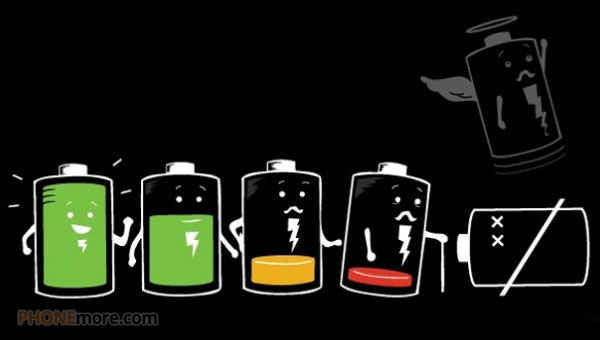
The situation is similar when it comes to battery life — the number of milliamp-hours (mAh). This figure does indicate battery capacity, but how long the smartphone will actually work depends on other important factors.
Processor efficiency is one of the main parameters affecting battery life. A high-performance processor requires a lot of energy, and therefore drains the battery faster and can even heat up the smartphone. The size, type, resolution, and refresh rate of the display are also important variables.
Nevertheless, when choosing a phone, you should focus on a capacity of at least 5000 mAh, if we are talking about Android smartphones, while Apple's devices generally have smaller batteries but rely on software optimization for battery life.
#4 Cores, Megahertz, and Processor Scores
The processor is the brain of your smartphone. The parameters that are most often talked about are megahertz (clock frequency) and the number of cores (individual computing units). And performance is measured in synthetic tests.
More cores and higher clock speeds can improve performance. But it is not entirely correct to focus only on these figures. Smartphone performance is influenced more by the manufacturing process and the composition of the cores, so the numbers can be manipulated.
Smartphones are often presented with new generations of processors, which are often marketed as being significantly more powerful than previous versions. However, for users, the difference may be quite insignificant, but in the presentation and promotional materials it can be presented as a breakthrough.
Benchmark scores also does not always reflect the actual performance. For example, MediaTek, which supplies processors for many Android manufacturers, was accused of overestimating the results. However, similar accusations have been made against Qualcomm.
#5 Screen
The screen is the part of the smartphone you interact with most often, so don't underestimate it. Today, most models use IPS or AMOLED arrays. AMOLED typically offers deeper blacks, higher contrast, and more vibrant visuals, whereas IPS is often found in affordable devices and provides natural color reproduction.
Pay attention to the refresh rate of the display. While 60 Hz remains the standard, 90 Hz and 120 Hz make scrolling, animation, and gaming noticeably smoother. The difference is especially noticeable with daily use.
Screen brightness is equally important. The higher it is, the more comfortable it is to use your smartphone outdoors in the bright sun. It is also worth considering the size of the display: compact models are more convenient to hold with one hand, and large screens are better suited for watching videos, reading, and gaming.
A good screen is not just about size, but also a balance between image quality, smooth operation and ease of use.
Conclusion
No single specification determines whether a smartphone is good or bad. A great camera will not compensate for poor battery life, and a powerful processor may be unnecessary if you mainly use messaging apps and social media. The best smartphone is the one that matches your needs, budget, and daily usage patterns.
 Tecno Phantom X
 LG K52
  Oppo Reno7 A
 LG Optimus 7Q
  Motorola Moto G9 Power
  Samsung Galaxy S25+