,
, 
The global transition to fifth-generation telecommunications networks has transformed how our digital infrastructure interacts with the physical world. While the modern consumer typically engages with cellular technology through a pocket-sized device—perhaps selected after consulting a comprehensive smartphone comparison system — the invisible infrastructure supporting that connection is massive and highly vulnerable to physical disruption. Modern mobile networks function as the central nervous system of the digital economy, enabling industrial automation, remote healthcare, and smart city infrastructure.
Consequently, the tolerance for network downtime during a commercial power grid failure has diminished to near absolute zero. Keeping 5G networks alive when the electrical grid goes down requires a massive array of physical power fail-safes. These systems encompass redundant direct current (DC) power plants, high-capacity battery arrays, and heavy-duty commercial diesel generators installed at the base of cell towers.
The Surging Energy Demands of 5G
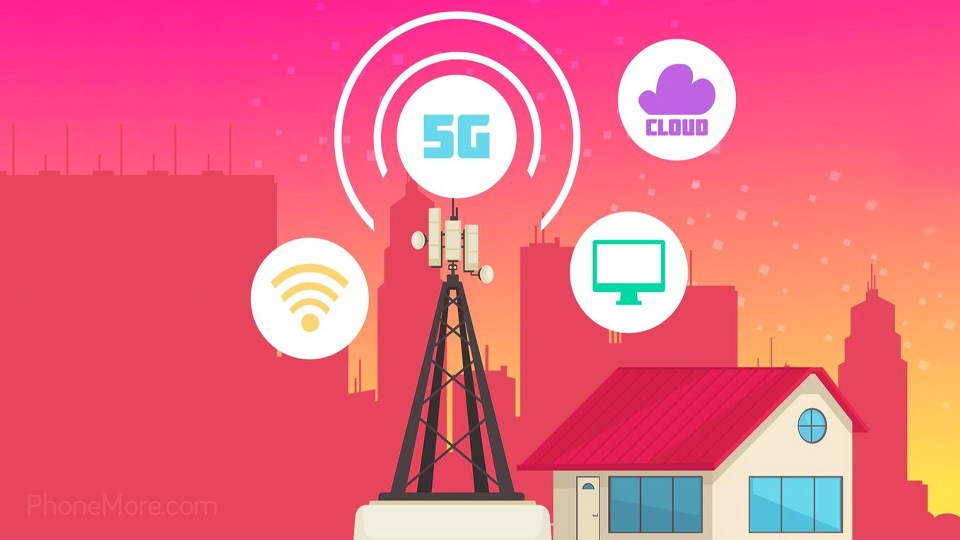
To understand the scale of the backup power required, one must first recognize the unique energy signature of 5G. 5G technology consumes between two and four times more power than its 4G/LTE predecessors. This dramatic increase is largely driven by the utilization of higher frequency spectrum bands, specifically Sub-6 GHz and millimeter-wave (mmWave), which deliver high data rates but suffer from limited signal propagation.
To maximize spectral efficiency, 5G base stations rely heavily on Massive Multiple-Input Multiple-Output (MIMO) antenna arrays. While a legacy 4G site might use a 4x4 configuration, 5G sites routinely employ 64 or 128 transceiver elements, with each massive MIMO sector adding approximately 1 kW of load. Furthermore, the integration of Multi-access Edge Computing (MEC) shifts processing power from centralized data centers directly to the cell tower. A basic MEC setup adds roughly 2 kW of demand, while advanced deployments can add 5 kW.
When combined with the heavy air conditioning required to keep this equipment from overheating—standard HVAC systems add a 30% overhead to the base load—a standard multi-carrier 5G site can demand massive electrical loads. A site that previously operated on a 20 kW generator now often requires units sized between 60 kW and 80 kW.
Generator Sizing and the Mathematics of Infrastructure
When the commercial utility grid fails, heavy-duty industrial diesel generators assume the load. Sizing these generators is a precise engineering discipline. Telecom operators generally follow
the 80% loading rule, ensuring continuous loads never exceed 80% of the generator's prime rating, while also adding a 25% growth factor to account for future network densification.
The complexities of generator sizing extend beyond simple kilowatt (kW) calculations into the realm of complex alternating current (AC) power. Electrical systems require reactive power to maintain electromagnetic fields, meaning the total power required by a facility—apparent power—is measured in kilovolt-amperes (kVA). Because of the critical interplay between apparent power, actual work, and electrical flow, commercial generators and backup systems are rated in kilovolt-amperes (kVA). To ensure a tower's network equipment receives the exact current it needs without overloading the system, engineers and technicians use tools like a kVA to amperage calculator to correctly size the backup generators.
Accurately converting kVA to amperage guarantees that upstream infrastructure—including heavy-gauge copper cabling and overcurrent protection circuit breakers—can handle the physical flow of electrons safely without overheating or prematurely tripping.
Bridging the Gap: The Battery Paradigm
While diesel generators provide long-term resilience, they are not instantaneous. When an outage occurs, it takes a standby generator between 10 and 15 seconds to detect the loss, crank the engine, and assume the electrical load. In telecommunications, a 10-second power loss would cause active calls to drop and force software controllers into lengthy reboot sequences.
To bridge this critical gap, telecom towers rely on vast arrays of deep-cycle batteries that instantly provide -48V DC power to the site's rectifiers. For decades, Valve-Regulated Lead-Acid (VRLA) batteries were the industry standard. However, the immense power density requirements of 5G have pushed operators to adopt Lithium Iron Phosphate (LFP) chemistries.
LFP batteries are a game-changer for cell tower deployments. They offer a 50% weight reduction compared to VRLA, which is crucial for modern pole-mounted small cells where structural weight is strictly regulated. More importantly, while VRLA batteries should generally only be discharged to 50% of their capacity to prevent damage, LFP cells can safely be discharged to 80% or 90%. Coupled with an extended lifecycle of 3,000 to 5,000 cycles, lithium systems drastically reduce the physical footprint and long-term maintenance costs of 5G backup power.
Regulatory Mandates and Algorithmic Efficiency
The deployment of backup infrastructure is heavily influenced by government mandates attempting to ensure public safety during natural disasters. Following devastating wildfires and subsequent Public Safety Power Shutoffs (PSPS), the California Public Utilities Commission (CPUC) issued a landmark ruling mandating a minimum of 72 hours of backup power capability at cell sites in high fire threat areas. At the federal level, the Federal Communications Commission continues to monitor network reliability via the Disaster Information Reporting System (DIRS), tracking tower outages during extreme weather events.
Brute-force hardware scaling is not the only solution. The convergence of 5G and AI is transforming passive base stations into intelligent energy nodes. Modern 5G architectures utilize machine learning to predict user traffic and employ "micro-sleeps." During milliseconds of idle time between data packets, the software instantly powers down the radio frequency transceivers. This dramatically reduces the base power load, extending battery runtimes and reducing generator fuel consumption during extended outages.
The Green Transition
As operators balance the massive energy demands of 5G with corporate sustainability goals, the environmental impact of thousands of diesel generators is undergoing intense scrutiny. The industry is actively pursuing zero-emission alternatives, notably hydrogen fuel cells.
Fuel cell systems offer the multi-day runtime capability of a diesel generator combined with the silent, emission-free operation of a battery bank. Advanced telecom hybrid sites are now experimenting with local solar arrays coupled with on-site electrolyzers. During normal operations, solar energy splits water to create pressurized hydrogen. During a grid failure, the fuel cell converts the stored hydrogen back into electricity.
As 5G continues to serve as the critical backbone for next-generation technology, maintaining uninterrupted service requires an exacting blend of physical infrastructure and software optimization. From calculating precise amperage tolerances to deploying intelligent LFP battery arrays, the telecommunications industry is continuously evolving its engineering protocols to ensure that when the lights go out, the network stays on.
 Motorola Edge 40
  HTC Droid Eris
  Lenovo Legion Y90
  Samsung Galaxy J2 Prime
  Xiaomi Redmi Note 12
  OnePlus 7T