Nokia 7 Plus (6GB RAM) vs Sony Ericsson Xperia Arc (LT15a)
Side by side comparison between Nokia 7 Plus vs Sony Ericsson Xperia Arc phones, differences, pros, cons and full specifications. What's the better?
,
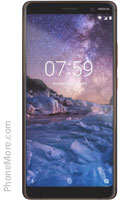
6"
IPS
IPS
1080x2160
12
MP
MP
16mp
6GB
RAM
RAM
Octa-core
3800
mAh
mAh
(Non removable)
vs
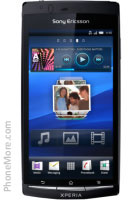
What's the better phone? Nokia 7 Plus (6GB RAM)
The phonemore's choice is much more technical than personal. Therefore, you shouldn't only consider this. Our goal is to help you, but what's important to us may not be important to you. You decide which one is the best! Comment!
 28 Advantages
  5 Advantages
 | 17 Common items in both devices |
| 16 million |
| PDAF on back camera and autofocus front camera / Autofocus |
| EIS: Digital stabilization |
| Capacitive |
| Multitouch |
| Accelerometer |
| Ambient light sensor |
| +10 specs and more in the table below |
Check the comparison table below for more items that are not evaluated in comparison score above.
Highlight differences Clear highlight📱 Model features | ||
| Nokia 7 Plus (6GB RAM) | Sony Ericsson Xperia Arc (LT15a) | |
| Model | Nokia 7 Plus (6GB RAM) | Xperia Arc (LT15a) |
| Other model names | Nokia 7+ TA-1046, Nokia 7 plus TA-1046 (Android One) | Sony Xperia Arc LT15, Sony Ericsson X12, Sony Ericsson Anzu |
| Country or region available |    China, Hong Kong, Taiwan |     (Latin America), Brazil, Canada, USA |
| Brand | Nokia | Sony Ericsson |
| Release date | 3/7/2018 | 3/1/2011 |
| Depth | 8 millimeters (0.31 inches) | 8.7 millimeters (0.34 inches) |
| Size (width x height) | 75.6 x 158.4 millimeters (2.98 x 6.24 in) | 63 x 125 millimeters (2.48 x 4.92 in) |
| Weight | 150 grams (5.25 ounces) | 117 grams (4.1 ounces) |
| Build, materials | feature not registered | Plastic body, glass front |
| Protection against water and others | Not supported | Not supported |
📲 Display | ||
| Nokia 7 Plus (6GB RAM) | Sony Ericsson Xperia Arc (LT15a) | |
| Display type | TFT IPS LCD | TFT LED-Backlit LCD |
| Screen size | 6" inches | 4.2" inches |
| Screen-to-body ratio | ~77.6% (screen-to-body ratio) | ~61.7% (screen-to-body ratio) |
| Display resolution | 1080x2160 pixels | 480x854 pixels |
| Touchscreen | Capacitive Multitouch | Capacitive Multitouch |
| Pixel density (dot pitch) | 402 PPI | 233 PPI |
| Colors | 16 million | 16 million |
| Scratch-resistant glass | Gorilla Glass 3 | Scratch-resistant glass |
| Refresh rate | feature not registered | 60Hz |
| Display features | feature not registered | Sony Mobile BRAVIA Engine |
🤖 Operating System | ||
| Nokia 7 Plus (6GB RAM) | Sony Ericsson Xperia Arc (LT15a) | |
| System version | Android 8.0 Oreo | Android 2.3 Gingerbread |
| Firmware update | Android 10 | Android 4.0.4 Ice Cream Sandwich ICS |
| User Interface | feature not registered | feature not registered |
⚙️ Processor | ||
| Nokia 7 Plus (6GB RAM) | Sony Ericsson Xperia Arc (LT15a) | |
| Chipset | 64bit: Qualcomm Snapdragon 660 SDM660 (14nm) | 32bit: Qualcomm Snapdragon S2 (MSM8255) (45nm) |
| CPU | Octa-core, 2 processors: 4x 2.2GHz Kryo 260 Gold (Quad-core) 4x 1.8GHz Kryo 260 Silver (Quad-core) | Single-core, 1 processor: 1x 1GHz Scorpion (Single-core) |
| GPU graphical controller | Qualcomm Adreno 512 650Mhz | Qualcomm Adreno 205 (266MHz) |
| Performance (benchmark) | feature not registered | feature not registered |
💽 Memory and storage | ||
| Nokia 7 Plus (6GB RAM) | Sony Ericsson Xperia Arc (LT15a) | |
| RAM memory | 6GB LPDDR4 | 512MB LPDDR2 |
| Internal storage | 64GB (54GB available) | 1GB (287MB available) |
| External storage | Until 256GB microSD, microSDXC (hybrid slot/shares the same SIM-2 slot) | Until 32GB microSD, microSDHC (dedicated slot) |
📶 Mobile networks | ||
| Nokia 7 Plus (6GB RAM) | Sony Ericsson Xperia Arc (LT15a) | |
| Dual-SIM | Dual-SIM Standby - Call active on one sim card (hybrid slot/shares the same microSD slot) | Not supported |
| SIM card | 2 slots (Dual-SIM) nano-SIM (4FF) | 1 slot (Single-SIM) Standard mini-SIM (2FF) |
| Maximum Download / Upload | 300/100 Mbps | 7.2/5.76 Mbps |
| Network technology | 2G, 3G, 4G | 2G, 3G |
| Frequency, bands | Expand band details Collapse details | |
| GSM MHz band | Quad-Band 850/900/1800/1900 | Quad-Band 850/900/1800/1900 |
| Primary 2G network | CDMA 800, GSM 850/900/1800/1900 | GSM 850/900/1800/1900 |
| Primary 3G network | CDMA2000 1xEV-DO TD-SCDMA 1900/2000 UMTS 850/900/1900/2100 | UMTS 800/850/1900/2100 |
| Primary 4G network | LTE Cat7 700/800/900/850/1700/1800/2100/2600 (Bands 1,3,4,5,7,8,20,28) TD-LTE 1900/2000/2300/2500/2600 (34,38,39,40,41) | Not supported |
| Primary 5G network | Not supported | Not supported |
| Primary data network | GPRS, EDGE, CDMA2000 EV-DO Rev 0, CDMA2000 EV-DO Rev A, TD-SCDMA, UMTS, TD-HSDPA, HSDPA, HSUPA, HSPA+, TD-LTE, LTE, LTE-A | CSD, GPRS, EDGE, UMTS, HSDPA, HSUPA |
| Secondary 2G network | GSM 850/900/1800/1900 | Not supported |
| Secondary 3G network | Not supported | Not supported |
| Secondary 4G network | Not supported | Not supported |
| Secondary data network | GPRS, EDGE | Not supported |
📷 Camera | ||
| Nokia 7 Plus (6GB RAM) | Sony Ericsson Xperia Arc (LT15a) | |
| Back camera (main camera) | (dual camera) 12 megapixels 13MP f/2.61µm | 8 megapixels |
| Main camera resolution | 4000x3000 pixels | 3264x2448 pixels |
| Video recording (primary) | 4K UHD (3840x2160) 30 fps | HD (1280x720) 30 fps |
| Flash | Dual-LED flash | LED flash |
| Focal aperture | f/1.8 (aperture) | feature not registered |
| Focal length | feature not registered | feature not registered |
| Sensor size | feature not registered | feature not registered |
| Pixel size | 1.4µm pixel | feature not registered |
| Autofocus | PDAF on back camera and autofocus front camera | Autofocus |
| Touch focus | Supported | Supported |
| Image stabilization | EIS: Digital stabilization | EIS: Digital stabilization |
| Zoom | Digital and optical zoom | Only digital zoom |
| Face/smile detection | Face detection, Smile detection | Face detection, Smile detection |
| BSI sensor | Not supported | Supported |
| HDR | HDR photo on both cameras | Not supported |
| Camera extras | feature not registered | feature not registered |
📸 Front camera | ||
| Nokia 7 Plus (6GB RAM) | Sony Ericsson Xperia Arc (LT15a) | |
| Front camera (secondary) | 16 megapixels | Not supported |
| Front camera resolution | 4608x3456 pixels | Not supported |
| Video recording (secondary) | Full HD (1920x1080) | Not supported |
| Front flash | Not supported | Not supported |
| Focal aperture | f/2.0 (aperture) | feature not registered |
| Focal length | feature not registered | feature not registered |
| Sensor size | feature not registered | feature not registered |
| Pixel size | 1µm pixel | feature not registered |
🔉 Sound and multimedia | ||
| Nokia 7 Plus (6GB RAM) | Sony Ericsson Xperia Arc (LT15a) | |
| Loudspeaker | Supported | Mono sound (not stereo) |
| Active noise cancellation | 2 microphones or more | 2 microphones |
| Radio | FM (RDS) | FM (RDS) |
| TV | Not supported | Not supported |
| Video formats | MP4, H.265, H.264, H.263 | MP4, H.263, H.264, WMV |
| Audio formats | MP3, OGG, eAAC+, FLAC | MP3, eAAC+, WMA, WAV |
🔌 Connectivity | ||
| Nokia 7 Plus (6GB RAM) | Sony Ericsson Xperia Arc (LT15a) | |
| USB | USB 2.0 Type-C reversible connector | MicroUSB 2.0 |
| Audio output | 3.5mm jack | 3.5mm jack |
| TV output | Not supported | Micro HDMI Type D |
| Bluetooth | 5.0 + A2DP/LE | 2.1 + A2DP |
| WiFi | 802.11 a/b/g/n/ac [wifi5] (2.4GHz, 5GHz) + MIMO WiFi Direct, hotspot | 802.11 b/g/n [wifi4] (2.4GHz) WiFi hotspot |
| DLNA | Not supported | Supported |
| GPS | A-GPS, GeoTagging, GLONASS, BeiDou | A-GPS, GeoTagging |
| NFC | Supported | Not supported |
| Infrared port | Not supported | Not supported |
🧭 Sensors | ||
| Nokia 7 Plus (6GB RAM) | Sony Ericsson Xperia Arc (LT15a) | |
| Sensors | Accelerometer Ambient light sensor Compass Fingerprint sensor Gyroscope Hall effect Proximity sensor | Accelerometer Ambient light sensor ANT+ Compass Proximity sensor |
| Vibrating alert | Supported | Supported |
🔋 Battery | ||
| Nokia 7 Plus (6GB RAM) | Sony Ericsson Xperia Arc (LT15a) | |
| Battery type | Li-Ion: lithium-ion (Non removable) | LiPo: li-ion polymer (Removable) BA750 |
| Battery capacity | 3800 mAh | 1500 mAh |
| Charger, watts | Wired charging | Wired charging |
| Inductive / wireless charging | feature not registered | Not supported |
| Talk time autonomy | 19 hours | 7 hours |
| Standby | 723 hours (30.1 days) | 430 hours (17.9 days) |
➕ Other features | ||
| Nokia 7 Plus (6GB RAM) | Sony Ericsson Xperia Arc (LT15a) | |
| Call control | Voice dialing, Voice recorder, Voice commands | Voice dialing, Voice recorder, Voice commands |
| Messaging | SMS (T9), MMS, E-mail, Push mail | SMS (T9), MMS, E-mail, Push mail |
| Hands-free calling | Supported | Supported |
| Video calling | Supported | Not supported |
| Ringtones | Polyphonic and customized | Polyphonic and customized |
| Web browser | HTML, XHTML, HTML5 | HTML, XHTML, Flash player |
| Antenna | Internal antenna | Internal antenna |
| Qwerty physical keyboard | Not supported | Not supported |
| Miscellaneous | • Colors: Black/copper, White/copper • Android One • USB OTG On-The-Go • Aluminum body • 18:9 screen • Nokia OZO • Carl Zeiss optics on both cameras • Fast battery charging (9V/2A=18W) | • Colors: Midnight Blue, Misty Silver • 8GB microSD included Open ES 1.1 • SE Timescape Java framework |
☢️ Radiation rate | ||
| Nokia 7 Plus (6GB RAM) | Sony Ericsson Xperia Arc (LT15a) | |
| SAR 1.6W/kg (USA, Mexico, etc.) | feature not registered | feature not registered |
| SAR 2W/kg (Europe, UK, etc.) | feature not registered | 0.66W/kg (head) |